Tuni · Andhra Pradesh · India
Stop the exhausting search.Begin with the breath.
Yoga, pranayama, mudra, healing and life coaching in the classical tradition, as taught by Guruji K. S. N. Murthy at Tuni. He is invited onto Telugu television as often to talk about mindset and transformation as about posture — the practices below are half of what he teaches. Thirty-four mudras, twenty asanas and twelve pranayamas — each with its own diagram, method, effect and honest list of cautions, in English and Telugu.
- 34
- Mudras
- 8
- Limbs of yoga
- 2
- Languages
Sama Vritti
4 · 4 · 4 · 4
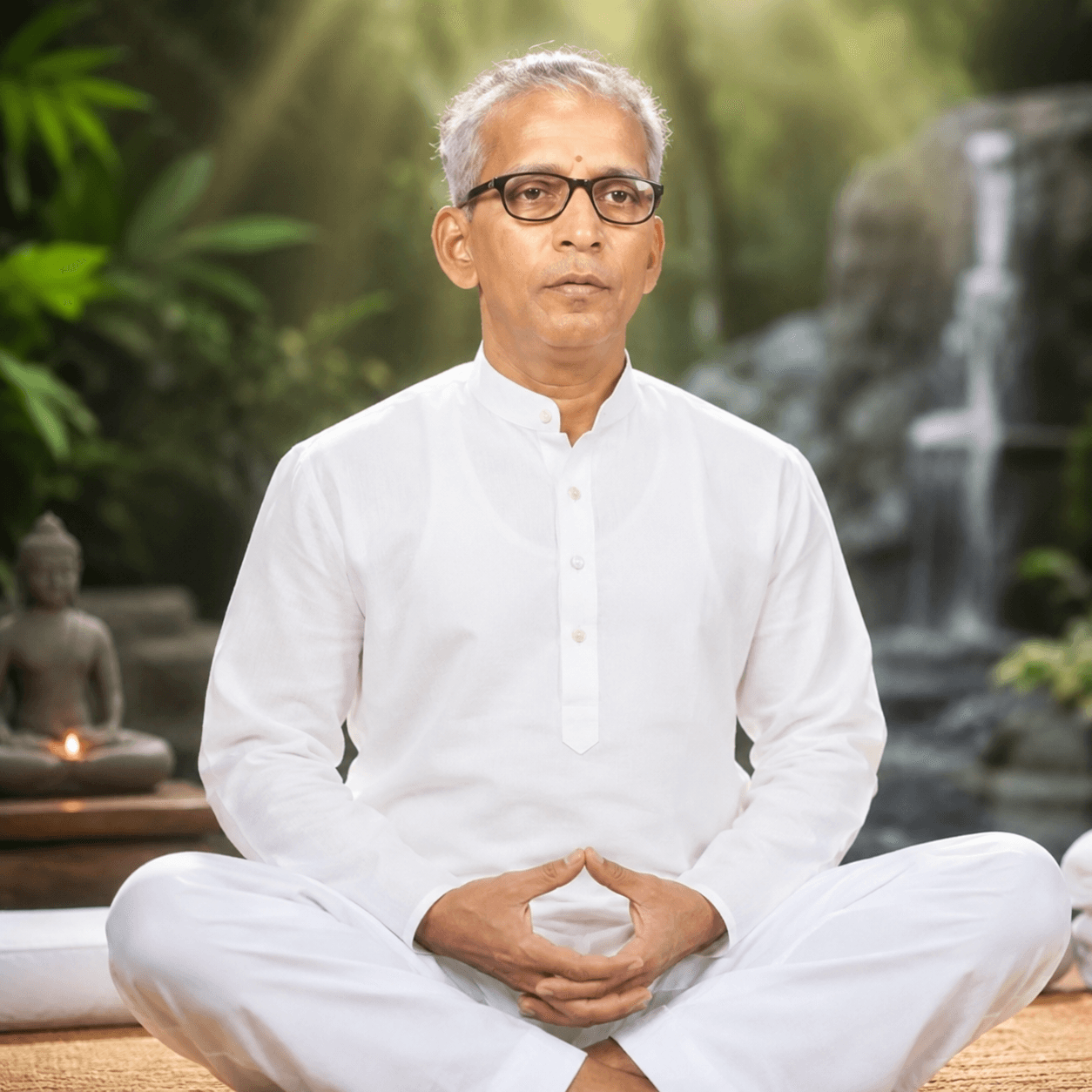
Guruji K. S. N. Murthy
Yoga Teacher · Life Coach · Holistic Healer
The teacher
One teacher, one town, and forty years of the same morning
At Somaraju Nivas on Old Bazar Street in Tuni, Kakinada District, Guruji K. S. N. Murthy teaches yoga, pranayama and healing. His message is plain enough to fit in a sentence: stop the pursuits that exhaust you, practise every day, and health follows on its own.
Nothing here is invented. Every mudra, asana and pranayama on this site comes from the received texts — the Yoga Sutras of Patanjali, the Hatha Yoga Pradipika, the Gheranda Samhita. What this site does is set them down clearly, in two languages, with the cautions included rather than left out.
Come to the centre in Tuni, or join Guruji from anywhere in the world through the YouTube channel.
Where to begin
Four ways in
They are not four separate subjects. They are one practice described from four distances — the hand, the body, the breath, and the mind that was doing all three.
मुद्रा
Mudra
Thirty seals of the hand, each closing a circuit the body already has. The smallest practice, and the one you can do anywhere.
Explore02आसन
Asana
Steady, comfortable seat. Patanjali gives the posture exactly three words, and every asana since has been a commentary on them.
Explore03प्राणायाम
Pranayama
The extension of the life-force through the breath — the only part of the autonomic nervous system you can take hold of directly.
Explore04ध्यान
Dhyana
The seventh limb. Not a technique to be acquired but what remains once the first six have done their work.
ExploreHasta mudra
Six seals to start with
Every diagram on this site is generated from a description of where the fingers go — so the drawings never disagree with the words.
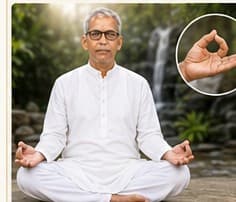
Gyan Mudra
ज्ञान मुद्रा
The seal of knowledge. Jñāna is knowing — not information, but the direct seeing that remains when the mind settles.
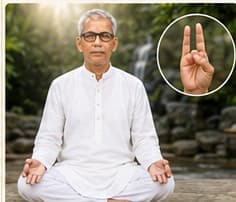
Prana Mudra
प्राण मुद्रा
The seal of life-force. Prāṇa is not breath but what moves in the breath — the animating current itself.
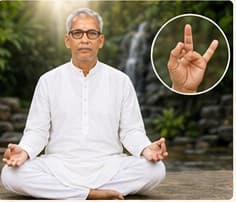
Apana Vayu Mudra
अपान वायु मुद्रा
Also called Mrita Sanjeevani Mudra — the seal that revives the dying — and Hridaya Mudra, the seal of the heart.
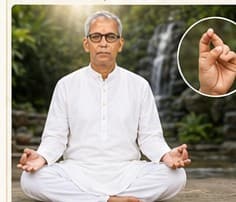
Vayu Mudra
वायु मुद्रा
The seal of air. Vāyu is the moving principle — wind in the sky, gas in the gut, tremor in the nerve.
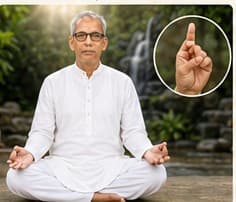
Surya Mudra
सूर्य मुद्रा
The seal of the sun — also called Agni Mudra, the seal of fire. It burns off what is heavy.
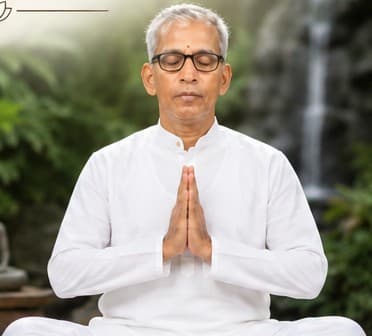
Anjali Mudra
अञ्जलि मुद्रा
The seal of offering. Añjali is the cupped hollow of the two palms — the oldest gesture of giving there is, and of receiving in the same motion.
Yoga Sutra 1.30
The obstacles, named
Patanjali lists nine antarāya — the things that stand between a person and a settled mind. Naming them is already half the work; the practices on this site are the other half.
Vyadhi — illness
The body announces itself only when something is wrong. Asana and pranayama return it to the background, where it belongs.
Styana — dullness
Not tiredness but the absence of will. Surya Mudra, Kapalabhati and an early hour address it more reliably than rest does.
Alasya — inertia
The gap between knowing and doing. The only remedy the tradition offers is abhyasa: the same practice, at the same hour, without negotiation.
Avirati — craving
The mind reaching outward for what it thinks it lacks. Pratyahara turns the senses around; the reaching stops on its own.
Bhranti-darshana — false view
Mistaking the rope for the snake. Svadhyaya — study, and honest self-observation — is the correction.
Anavasthitatva — instability
Reaching a state and losing it again. Expected, and not a failure — the sutras list it as an obstacle precisely because everyone meets it.
Physiology
What it actually does to the body
The tradition described effects it could observe. Modern physiology describes mechanisms it can measure. Where the two meet, this site says so; where they do not, it says that too.
"Yogaś citta-vṛtti-nirodhaḥ — yoga is the settling of the movements of the mind."
Yoga Sutra 1.2