Pushan Mudra
The two hands do different things: the right gathers and receives, the left directs and releases. The mudra of digestion in its widest sense — of taking in, extracting what is useful, and letting the rest go.
Meaning of the name
The seal of Pūṣan, the Vedic god of nourishment and safe passage — the one who knows the roads and brings travellers home.
How to practise
- 1
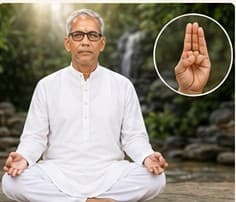
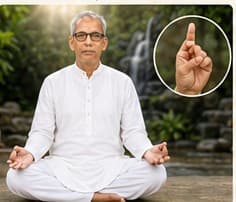
Right hand: join the tips of the thumb, index and middle fingers; extend the ring and little fingers.
- 2
Left hand: join the tips of the thumb, middle and ring fingers; extend the index and little fingers.
- 3
Rest both hands on the thighs, palms upward.
- 4
Breathe evenly for ten to twenty minutes, ideally an hour after eating.
- 5
To reverse the emphasis — for release rather than assimilation — swap the two hand shapes.
Benefits
- Improves digestion and the assimilation of nutrients
- Relieves nausea, flatulence and the discomfort of a heavy meal
- Helps travel sickness and general queasiness
- Supports the liver, gall bladder and the whole eliminative process
- Traditionally used to clear energy after an unsettling experience
What happens in the nervous system
The asymmetry is the interesting part. Almost every other mudra is bilateral, and the brain treats symmetric input as a single signal. Two different shapes force each hemisphere to process its own hand — which is why practitioners describe this mudra as unusually attention-demanding, and why it is difficult to hold while distracted.
Related practices
KSN Murty Yoga Center