Apana Vayu Mudra
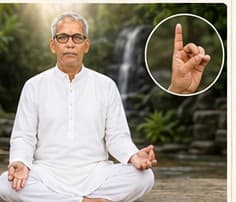
A combination of Vayu and Apana Mudra. Traditionally taught as a first-aid gesture during cardiac distress, held while help is being called. It should never replace emergency care, but it costs nothing to know.
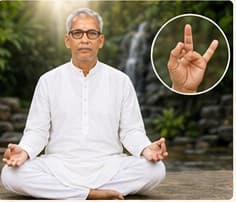
Meaning of the name
Also called Mrita Sanjeevani Mudra — the seal that revives the dying — and Hridaya Mudra, the seal of the heart.
How to practise
- 1
Fold the index finger to the base of the thumb.
- 2
Bring the tips of the middle and ring fingers to the tip of the thumb.
- 3
Keep the little finger extended.
- 4
Make the shape in both hands and hold with moderate pressure.
- 5
Breathe as slowly and calmly as the situation allows. In an emergency, call for medical help first and hold the mudra while waiting.
Benefits
- Strengthens the heart and steadies the pulse over regular long-term practice
- Relieves palpitations and the anxious tightness of the chest
- Regulates blood pressure in both directions
- Eases angina-type discomfort and breathlessness on exertion
- Reduces acidity, gas and the reflux that so often mimics heart pain
- Calms panic; the shape gives the hands something definite to do
What happens in the nervous system
The heart is under continuous dual control — sympathetic acceleration against vagal braking. Panic and cardiac events both drive sympathetic outflow hard, and much of the chest tightness in a panic attack is skeletal muscle, not myocardium. Slow breathing with a long exhale restores vagal braking within a few breaths, which is why it helps in both cases even though only one is a cardiac problem.
Related practices
KSN Murty Yoga Center