Gyan Mudra
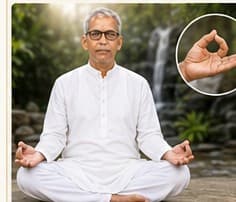
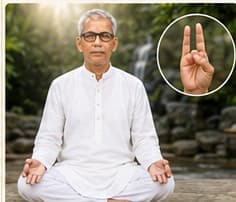
The most widely practised mudra in all of yoga. The index finger — the individual self — bows to the thumb, the universal. Held during meditation and pranayama, it steadies attention and quietens the surface chatter of the mind.
Meaning of the name
The seal of knowledge. Jñāna is knowing — not information, but the direct seeing that remains when the mind settles.
How to practise
- 1
Sit in Padmasana, Siddhasana or Sukhasana, spine upright and the back of the head lifting away from the shoulders.
- 2
Rest the backs of the hands on the knees or thighs, palms facing upward — open, receiving.
- 3
Bring the tip of the index finger to the tip of the thumb so they meet with light pressure. The pressure should be no more than the weight of the finger itself.
- 4
Let the middle, ring and little fingers stay straight but soft, slightly apart, never rigid.
- 5
Close the eyes, let the breath find its own slow rhythm, and rest attention at the point where finger and thumb touch.
Benefits
- Steadies wandering attention and lengthens the span of concentration
- Reduces restlessness, anxiety and the sense of being mentally scattered
- Supports memory and clarity of thinking, especially in students and elders
- Eases insomnia when practised for ten minutes before sleep
- Relieves mild depression and low mood by lifting prana toward the head
- Deepens and slows the breath without any conscious effort to control it
What happens in the nervous system
The fingertips carry one of the densest concentrations of sensory nerve endings in the body, and their cortical representation in the somatosensory homunculus is enormous relative to their size. Holding a constant, gentle touch gives the brain a single unchanging signal to rest on — the same principle behind a mantra or a candle flame, delivered through touch instead of sound or sight. Sustained, it shifts the balance toward parasympathetic (vagal) tone: the breath lengthens, heart rate variability rises, and the fight-or-flight loop loses its grip.
Related practices
KSN Murty Yoga Center