Dhyana Mudra
Both hands rest in the lap, the right on top of the left, thumb tips lightly touching to form an oval. The gesture of the seated Buddha and of every long meditation tradition that followed — because it is the only hand position the body can hold for an hour without noticing it.
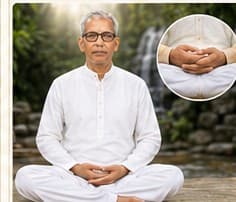
Meaning of the name
The seal of meditation. Dhyāna is the seventh limb of Patanjali's path — unbroken attention, where concentration has stopped needing to be renewed.
How to practise
- 1
Sit in a stable cross-legged posture, or on a chair with both feet flat.
- 2
Rest the back of the right hand in the palm of the left, in the lap, just below the navel.
- 3
Bring the tips of the two thumbs lightly together so an oval opens between the hands.
- 4
Let the shoulders drop completely; the arms should carry no weight.
- 5
Watch the thumbs — if they press together the mind has tightened, and if they fall apart it has drifted. They are an honest gauge.
Benefits
- Allows very long sitting without fatigue in the arms or shoulders
- Provides continuous, honest feedback on the state of attention
- Deepens meditation by removing one more thing to attend to
- Warms the lower abdomen and supports digestion during long sits
- Steadies the emotions; classically associated with equanimity
What happens in the nervous system
Sustained attention degrades when the body has to keep making small postural corrections. Placing the hands where they need no muscular support removes that drain entirely, and the light thumb contact substitutes a single low-noise sensory channel for the many the hands would otherwise generate.
Related practices
KSN Murty Yoga Center