Chin Mudra
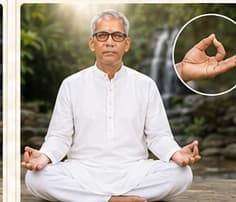
The same finger position as Gyan Mudra, but with the palms turned downward onto the knees. Turning the palms down grounds and contains the energy instead of drawing it upward — the counterpart, not a variant.
Meaning of the name
The seal of consciousness. Chit is awareness itself — the one that knows, rather than the thing known.
How to practise
- 1
Sit as for Gyan Mudra, spine long and shoulders released.
- 2
Join the tip of the index finger to the tip of the thumb on both hands.
- 3
Turn the palms face down and rest them on the knees, the weight of the arms fully given to the legs.
- 4
Feel the energy settle into the pelvis and legs rather than rising to the head.
- 5
Practise when the mind is over-stimulated, or in the evening when Gyan Mudra would keep you awake.
Benefits
- Grounds excess mental energy and calms an over-active mind
- Suits evening practice, where the upward pull of Gyan Mudra can disturb sleep
- Reduces the light-headedness some people feel after long pranayama
- Improves posture by encouraging the shoulders to drop and the chest to open
- Helps anxiety that presents as agitation rather than as worry
What happens in the nervous system
Pronating the forearm and letting the arm hang its weight into the thigh removes the low-grade postural work the shoulder girdle does when the palms face up. That small reduction in muscular effort registers as a drop in overall arousal — the same reason people sleep with the palms down.
Related practices
KSN Murty Yoga Center