Abhaya Mudra
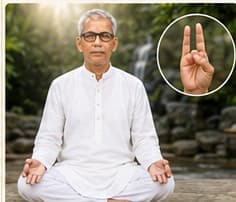
The right hand is raised to shoulder height, palm facing outward, fingers together and pointing up. Found on almost every ancient Indian image of a teacher or deity, from Gandhara to Amaravati. It is a gesture given to others, and in practice it changes the giver.
Meaning of the name
The seal of fearlessness. A-bhaya: without fear. The open palm is the oldest proof of peaceful intent — it shows there is no weapon.
How to practise
- 1
Stand or sit tall, weight evenly distributed.
- 2
Raise the right hand to the height of the shoulder, elbow bent and close to the body.
- 3
Turn the palm outward, fingers together and extended upward, thumb relaxed alongside.
- 4
Let the left hand rest open on the thigh, palm up, in Varada — the giving gesture.
- 5
Hold for a minute, breathing evenly, and notice what happens to the chest and the jaw.
Benefits
- Opens the chest and counteracts the protective, folded-in posture of anxiety
- Reduces fear before difficult encounters and public speaking
- Builds a sense of personal steadiness and authority
- Releases the shoulders and upper back
- Cultivates the intention to give reassurance rather than seek it
What happens in the nervous system
Fear narrows the body: shoulders forward, chest closed, jaw tight. Deliberately adopting the opposite shape is not merely symbolic — expansive postures reliably lower self-reported anxiety and change breathing depth within two minutes. The mechanism is unglamorous: an open chest allows a full breath, and a full breath is incompatible with panic.
Related practices
KSN Murty Yoga Center