Anjali Mudra
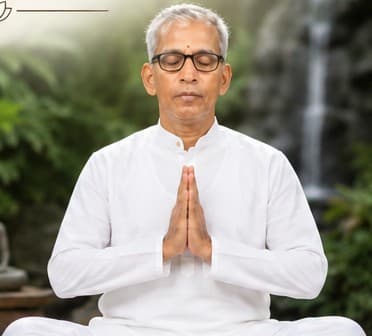
Palms joined at the heart. Known to every Indian household as namaskāram, it is also the formal opening and closing of practice: the two halves of the body, the two hemispheres, the two sides of a person brought into one line.
Meaning of the name
The seal of offering. Añjali is the cupped hollow of the two palms — the oldest gesture of giving there is, and of receiving in the same motion.
How to practise
- 1
Bring the palms together in front of the sternum, thumbs resting lightly against the breastbone.
- 2
Press the pads of the fingers evenly — the heels of the hands should meet as fully as the fingertips.
- 3
Leave a small hollow between the palms, as if holding something living.
- 4
Draw the elbows slightly away from the ribs and let the shoulders drop.
- 5
Bow the head a little, close the eyes, and take three unhurried breaths before beginning or ending practice.
Benefits
- Centres attention instantly and marks a clear beginning to practice
- Balances left and right, and improves proprioceptive symmetry
- Opens the chest and corrects rounded shoulders when held with the elbows lifted
- Reduces anxiety before speaking, performing or entering a difficult conversation
- Cultivates humility — the posture teaches what the mind is slower to learn
What happens in the nervous system
Pressing the two hands together with equal force requires the brain to compare left and right sensory input continuously, which briefly occupies the attentional networks that otherwise wander. It is a very cheap way to interrupt a spiral of thought — one reason the gesture survived into daily greeting rather than staying inside temples.
Related practices
KSN Murty Yoga Center