Brahma Mudra
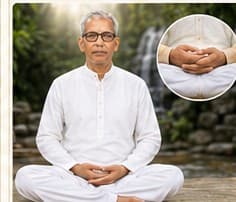
Both hands make Adi Mudra and press together, knuckles facing, at the level of the navel. The full-body version of the calming effect, and the standard hand position for long pranayama in several classical schools.
Meaning of the name
The seal of the vast. Both hands in Adi Mudra, brought together at the navel — the individual doubled and returned to the whole.
How to practise
- 1
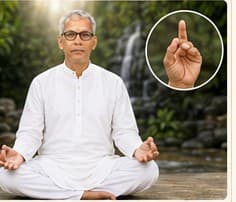
Make Adi Mudra in both hands — thumbs enclosed by the fingers.
- 2
Turn the fists so the backs of the fingers face each other, and press them together lightly.
- 3
Hold the joined fists against the body at the level of the navel.
- 4
Keep the elbows relaxed and close to the sides.
- 5
Practise long, even breathing here for fifteen to thirty minutes.
Benefits
- Produces a deep, whole-body settling within a few minutes
- Supports very long pranayama sessions without fatigue
- Improves lung capacity by opening the back and sides of the ribcage
- Reduces mental agitation and obsessive thought loops
- Traditionally held during japa and mantra repetition
What happens in the nervous system
Holding the arms symmetrically against the trunk restricts the front of the chest slightly, which redirects the breath into the posterior and lateral ribs. Those regions have a much larger share of the lung's blood supply when upright, so the same volume of air does more gas exchange — a real, measurable efficiency, not a subtle one.
Related practices
KSN Murty Yoga Center