Yoni Mudra
A seated, two-handed mudra practised with the eyes closed, turning attention inward toward mūlādhāra, the root centre. Guruji lists it among the mudras that steady the emotions and support creative work, alongside its long history as a meditation seal in its own right.

Meaning of the name
The seal of the source. Yoni means womb, or origin — the point a thing comes from before it takes shape. The hands are brought together below the navel to form a diamond, the classical symbol of that origin point.
How to practise
- 1
Sit in a stable cross-legged posture or on a chair with the spine upright.
- 2
Interlace the fingers of both hands, except the index fingers and thumbs.
- 3
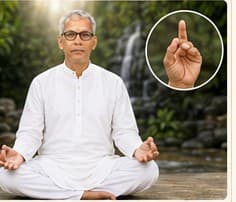
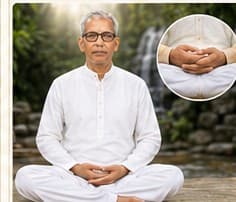
Extend the two index fingers and bring their tips together, then bring the two thumb tips together below them, forming a diamond shape.
- 4
Rest the hands in this shape at or just below the navel.
- 5
Close the eyes, breathe slowly, and rest attention at the base of the spine for ten to twenty minutes.
Benefits
- Balances the emotions and reduces mood swings
- Supports creative and intuitive work by quietening surface mental chatter
- Deepens meditation by giving the hands a stable, symmetrical shape to rest in
- Traditionally associated with awakening awareness of mūlādhāra, the root centre
- Provides a settled posture for pranayama practised with the eyes closed
What happens in the nervous system
As with the other paired, symmetrical hand mudras on this site, bringing both hands into an identical, balanced shape requires the brain to process matched input from both sides, which briefly narrows attention onto the hands themselves. That narrowing is a plain, well-documented route into a quieter mental state, regardless of what else is claimed for the posture.
Related practices
KSN Murty Yoga Center